Beginner’s Language Learning Guide: Proven Tips to Level Up Fast and Speak Fluently
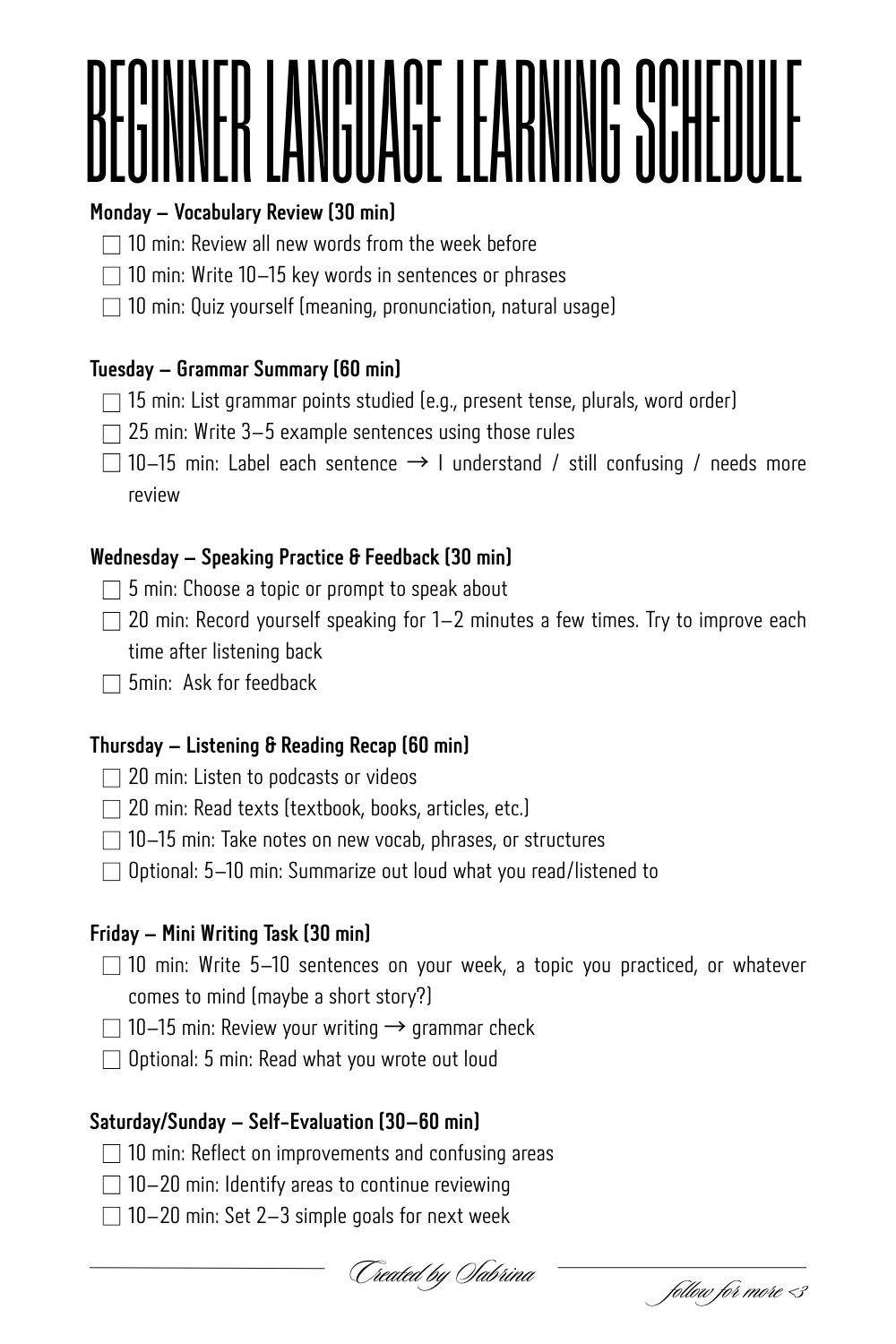
A weekly language-learning schedule for beginners (A1/A2 CEFR) to stay consistent and improve quickly.


The ultimate beginnerfriendly daily language learning schedule x study checklist that is perfect for A1, A2 level language learners.
A comprehensive language learning guide for beginners starting a new language from scratch.
I know how difficult it can be to bring order and structure to our study materials, especially when you’re teaching yourself a language. So here’s a quick and easy-to-apply checklist to help you maximize your study time. Study smart, not hard.
Included is an essential checklist of tools and habits that come in handy while studying, along with a few optional extras to elevate your learning experience. And also a 1 page free PDF of this guide you can use as a schedule.
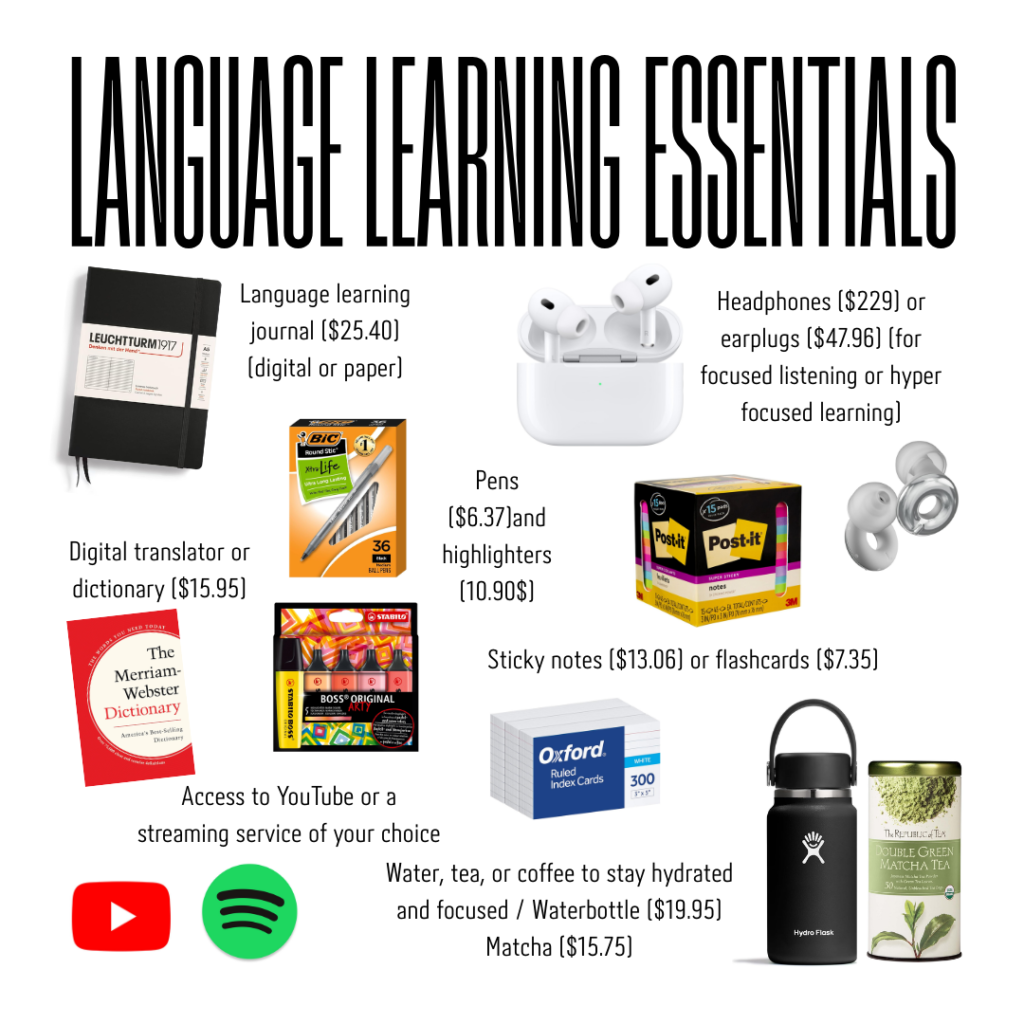
Discover my all-time favorite study essentials on my Amazon Storefront. If you choose to shop through my link, I may earn a commission at no extra cost to you.
A weekly language-learning schedule for beginners (A1/A2 CEFR) to stay consistent and improve quickly.
Lorem ipsum dolor sit amet, consectetur adipiscing elit. Ut elit tellus, luctus nec ullamcorper mattis, pulvinar dapibus leo.
Lorem ipsum dolor sit amet, consectetur adipiscing elit. Ut elit tellus, luctus nec ullamcorper mattis, pulvinar dapibus leo.
Powered By EmbedPress
Living the life of a Pilates princess? It’s actually much easier than you think. All you need is a solid routine, a mindset shift, and you’ll already feel so much better.
Before you begin breaking a habit, take a moment to clarify why you want to change. It’s the deeper purpose (and the discipline) that keep you motivated when things get tough and help you avoid falling into the next potentially harmful habit.
A guide on how to finally stop procrastinating and leave your lazy girl era where it belongs, behind! Becoming highly productive is a choice, and it’s not as hard as you might think.
Manifestation goes hand in hand with the Law of Attraction. It is based on the belief that our thoughts and emotions can influence, and even shape, our reality. And lucky for you, there are a few tips and tricks to manifest like a pro in no time!
The perfect guide for beginners to keep a diary with little effort and great success. the most important thing is to stay consistent to unlock the benefits behind journaling and starting out step by step is just what might help you do so.
One of the most popular study methods out there is the Pomodoro Technique, as it not only helps boost focus but also increases productivity. How do you use it, and how can you master it?